Phasics
- Wavefront, MTF and QPI measurement solutions
- Products
- Applications
- Markets
- Company
- Contact us

March 11, 2026
Scaling Up for Laser Fusion
Following the recent milestone achievements in Inertial Confinement Fusion (ICF), the laser community is actively exploring new architectures to build more efficient, kilojoule-class laser systems that can operate at higher repetition rates (e.g., 10 Hz). To reach these energy levels, Coherent Beam Combining (CBC) is emerging as a scalable approach.
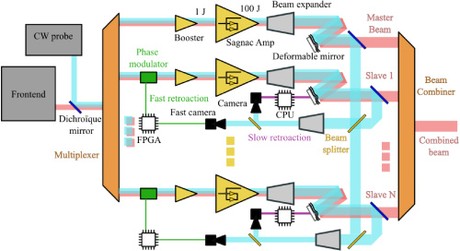
Figure 1: Overall Hybrid CBC architecture combining passive and active stages, Image credit: Adapted from Lebegue et al.
Recently, a collaborative research team from CEA, LULI, LOA, and Phasics published a comprehensive study in Optics Express validating a hybrid CBC approach. The study proposes using passive CBC for lower energy pre - amplification, followed by active CBC to combine multiple sub beams and push the output to the 1 kJ mark.
Catching Microsecond Distortions
While active CBC is highly scalable, it comes with a major technical hurdle, especially in low rep rate, large aperture systems: the need to diagnose and correct rapid wavefront changes caused by flashlamp pumping. To maintain phase locking across multiple beams, the wavefront sensing system must be exceptionally fast and accurate.
To capture these fast transient effects, the team relied on a high-speed wavefront sensor integrated into the HERA-LULI platform: Phasics SID4-kHz. Using a 1064 nm continuous wave probe laser, the setup measured both the wavefront and interference patterns of two sub beams simultaneously.
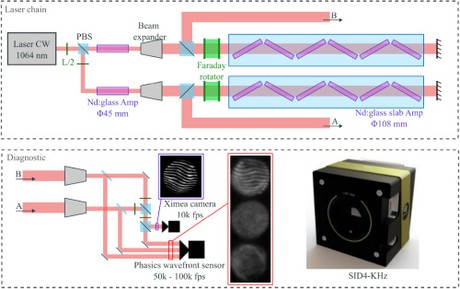
Figure 2 : Diagnostic setup integrating SID4, Image credit: Adapted from Lebegue et al.
The SID4-kHz in Action
Conventional interferometric measurements are often difficult to use in this type of dynamic environment, which makes single-shot wavefront sensing particularly relevant here. Running at a sampling rate of 61 kHz and a fast exposure time of 10 µs, the SID4-kHz successfully captured the transient wavefront perturbations right as they happened. The data showed that the wavefront changes rapidly shortly after the pump begins, primarily showing up as a tilt, while higher-order aberrations stay within the noise level.
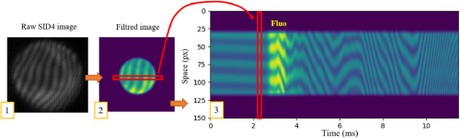
Figure 3 : SID4 measurement results, Image credit: Adapted from Lebegue et al.
By extracting the piston phase changes within microseconds, researchers were able to calculate the exact feedback bandwidth needed to stabilize the beams, allowing the team to estimate the feedback bandwidth required to approach high combining efficiency (~99%).
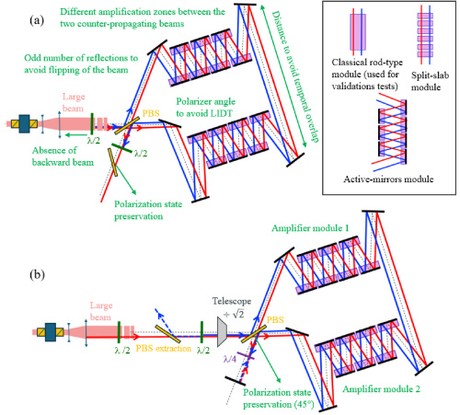
Figure 4 : Amplifier module architecture, Image credit: Adapted from Lebegue et al.
Powering the Next Generation of Lasers
Based on these successful diagnostics, the team outlined a clear path for a 1 kJ / 10 Hz laser architecture, relying on the SID4 wavefront sensors for both slow drift compensation and fast single-shot corrections.
This work shows how fast wavefront diagnostics are becoming a practical requirement for scaling high energy laser architectures. Whether it's for ICF, petawatt-class lasers, or high-power industrial platforms, the SID4 series continues to be a trusted tool for advanced wavefront control.
Read the full paper to dive into the experimental setup and results:
Pierre Lebegue et al., "Coherent beam combining strategies for high-energy and high-repetition rate lasers dedicated to inertial nuclear fusion applications," Optics Express, Vol. 33, Issue 22, pp. 45615-45630 (2025).