Phasics
- Wavefront, MTF and QPI measurement solutions
- Products
- Applications
- Markets
- Company
- Contact us

May 6, 2025
Thin-film optical elements, such as filters and mirrors, are vital to high-power laser systems due to their high efficiency and low losses. Yet even tiny amounts of optical absorption can lead to significant temperature gradients, causing mechanical deformation and refractive index shifts that compromise the wavefront quality of the laser beam.
In a recent detailed investigation, a collaborative team from Institut Fresnel and CILAS designed a sophisticated experimental setup to precisely measure these effects. Central to their method was Phasics' SID4 wavefront sensor, which employs quadri-wave lateral shearing interferometry (QWLSI) technology for real-time, high-accuracy wavefront measurement.
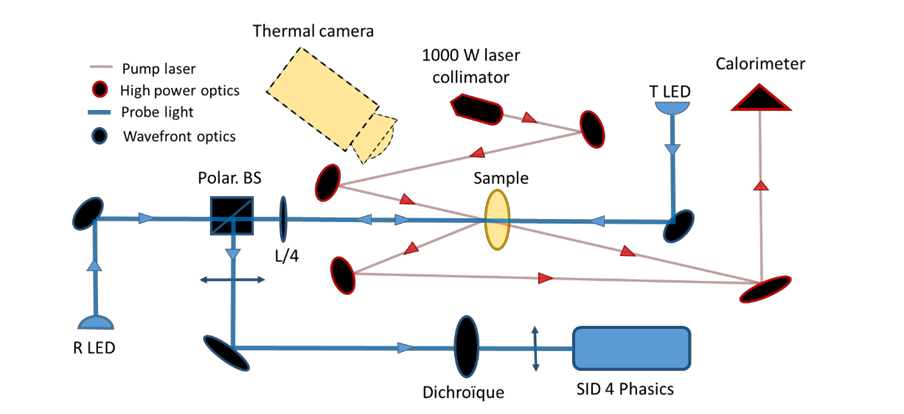
Figure 1: Scheme of the experimental set-up for photo induced phase deformation measurement.
The experimental setup utilized a continuous-wave (CW) laser operating at 1080 nm, with adjustable power up to 1000W, to carefully manage thermal load without exceeding the optical component’s damage threshold. Simultaneously, an Infratec thermal camera recorded precise surface temperature distributions. To avoid interference from the high-power laser during wavefront measurements, low-power LED illumination at 530 nm and 1050 nm wavelengths was employed, with a dichroic filter removing unwanted laser scatter, ensuring high-fidelity phase images.
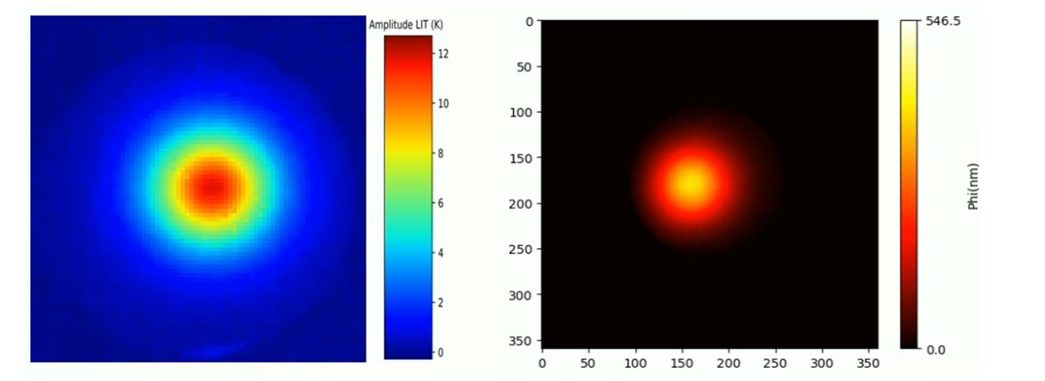
Figure 2: Thermal image (left) and phase image (right) of a FP cavity at thermal equilibrium.
The spectral shift (~10 pm/°C) was measured using a spectrophotometer under controlled heating. In parallel, wavefront deformation caused by thermal gradients was analyzed using the Phasics SID4 wavefront sensor. Real-time measurements of transmitted and reflected wavefronts were conducted and compared with FEM simulations, showing strong agreement and validating the thermal model.
This approach not only underscores the practical utility of SID4 sensors in high-power laser applications but also offers critical insights to optimize the design and fabrication of future optical components.
Read full article here. For more information or collaboration inquiries, feel free to contact us here.